


Aero road bike: The lightning-fast bike for top times
Sporty, fast and aggressive: an aero racing bike combines a futuristic look with maximum performance. This is thanks to the aerodynamic frame design, which makes the racing bike particularly fast and streamlined on the road. Read all the important features of the aero racers on TOUR and find out whether the fast bike suits your riding behaviour. You can also find out about the latest new releases and test reports in the aero segment.
What is an aero road bike?
The aero bike is the sprinter among the Racing bikes. As the name suggests, this type of racing bike is all about air (aero) and speed. And for good reason: a racing cyclist is slowed down mainly by air resistance from 20 km/h - and this increases exponentially the faster they go.


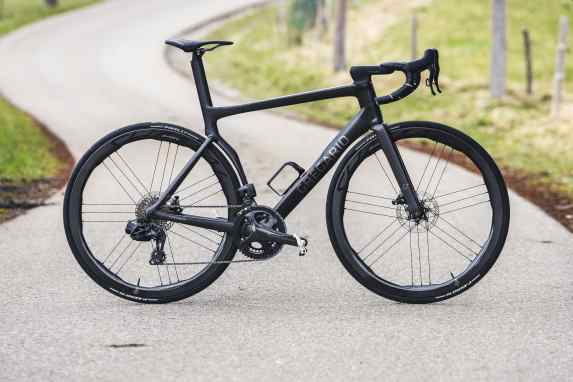

Cyclists who want to maintain a high speed on the roads must offer the headwind only a small surface to attack. So it's not just about low weight and less rolling resistance. Thanks to its aerodynamic shape, the aero road bike is the ideal companion for real speed bikers.
What characterises an aero bike?
An aero racing bike is an aerodynamically optimised bike that allows cyclists to ride particularly fast and lose less energy in the process. Aero racers have a very special shape for this purpose and usually come with special components and wheels that emphasise their typical appearance.
With the help of computer models and tests in the wind tunnel, the aero racing bikes are optimised for the lowest possible air resistance. The result is a high-tech racer designed for top speeds.
The aero frame: Stiffness and aerodynamics
The aero road bike impresses with its sporty and aggressive geometry. At first glance, you can see that the frame is more voluminous and has a specific shape compared to other all-round models. The tubes have a larger surface area and converge in a cone shape at the ends, which reduces the surface area exposed to the wind.
In contrast to classic bikes, the head tube on the streamlined models is slightly shorter (approx. 140 mm). As a result, the rider sits flatter and therefore more aerodynamically on the bike. A flat frame and large tube cross-sections also reduce air resistance, but also make the aero road bike heavier and stiffer.
Most aero bikes have a Low ratio of reach (standardised length of the road bike) and stack (standardised height of the frame). This puts the rider in a stretched and low riding position to benefit even more from the aerodynamics. Another special feature that immediately catches the eye when looking at the racer is the angular frame and the mostly straight top tube. These features give the aero bike its distinctive shape and special geometry.

Wheels and tyres: set sail for even more speed
Road cyclists should also pay attention to aerodynamics when choosing their wheels. Rims with a high profile are typical. Most cyclists choose a rim profile with a height of 40 to 80 mm. These can offer an enormous advantage: When the airstream flows sideways, a "sail effect" can occur, which provides additional propulsion.
Although the rims are usually made of carbon, they are still heavier than the flatter models. In addition, the high rims are less stable in crosswinds.
More power: Other components of the aero wheel
An aero racer is designed for aerodynamics down to the smallest detail. Brakes, cables and wires are integrated into the handlebars and frame, while the seat post and seat tube merge with the frame. Special aero handlebars, which offer particularly low wind resistance, are also typical. For the Professionals there are special handlebar-stem units, so-called aero cockpits, which are usually lighter than the combination of classic stem and handlebars.
Many athletes choose a relatively high gear ratio for their aero bike in order to be able to adjust the cadence perfectly to any speed. Depending on personal preference, road cyclists can opt for mechanical or electric gears. Popular Gearshift groups are for example Shimano Dura-Ace Di2, SRAM Force eTap AXS or Campagnolo Super Record EPS.
Due to the high speeds that can be achieved with an aero bike, many manufacturers have long favoured rim brakes. Disc brakes, on the other hand, were initially considered less aerodynamic. However, the brake systems have become increasingly better integrated into the frame, so that there are hardly any measurable differences compared to rim brakes. As a result, more and more road cyclists are opting for the more expensive disc brakes. In most cases, however, personal preference determines the final choice of brakes.
What material are aero racing bikes made of?
The frames of aero bikes are made almost exclusively from carbon fibre. This is partly due to the fact that carbon fibres are easier to model and are therefore better suited to the aerodynamic shape of the frame. Carbon also weighs less than aluminium and can therefore compensate for the disadvantage of the heavier frame construction.
How does an aero bike ride?
Thanks to the short head tube and straight top tube, the road cyclist sits very flat and stretched out on an aero bike. The aerodynamic position enables high speeds and the athlete can save energy thanks to the low wind resistance.
Due to the stiffness and the flat frame, the aero bike initially feels unfamiliar. It is susceptible to crosswinds, especially with high rims, and tight bends can also be an obstacle at first. Uneven surfaces can also be problematic under certain circumstances. The thin tyres of the racer offer good grip, especially on flat roads.

Who is an aero bike suitable for?
The aero racing bike has only really become "fashionable" in recent years. This is not least due to the fact that this type of bike was initially ridden exclusively by professional racers in the peloton. On these streamlined racers, they were able to break away from the field of riders in a matter of seconds and pull away at high speeds. Designed for pure aerodynamics, the racing bikes had few comfort features at the time, which is why they were a marginalised segment.
This has changed over time. Wider tyres, lower weight and an improved riding position mean that the aero racer is used more frequently. Amateur athletes also appreciate the aerodynamic riding position and ride their racing bikes in their own areas. Aero racing bikes are still aimed at a specific type of rider, to whom the following points apply:
- sporty and ambitious driving style
- Constantly high speeds
- Improved performance and best times
- The idea of competition
An aero bike is particularly suitable for riders who are travelling on flat roads. However, the athlete not only benefits from the high speeds during sprints and over short distances, but also saves a few watts over longer distances. This is reflected in the Fitness noticeable. Triathletes who do not want to buy a special time trial bike or triathlon bike can also use an aero road bike. The bike is less suitable for long mountain stages and slow climbs due to its higher weight.
More and more professional riders are riding the high-performance bikes, especially on the flat stages of the Grand Tours, because sometimes every second counts. Breakaway riders in particular can benefit from the streamlined and stiff bikes and fight their way to the front alone despite strong headwinds. An aero bike can also help the rider reach top speeds during explosive sprints and fast descents.

What are the disadvantages of an aero road bike?
If you want to ride an aero road bike, your main concern is speed. Due to the stretched and aggressive riding position, this type of aerodynamic bike is less comfortable than other models. In addition, the bikes are much heavier than other carbon racers and not everyone likes the futuristic look.
One aspect that can also be seen as a disadvantage is the high price of aero bikes. Racing bikes are often associated with high research costs. The models are tested for months in the wind tunnel in order to achieve the best possible performance. This is naturally reflected in the price of aero bikes. Although entry-level models are available for just under 1800 euros, racing bikes with good equipment and components that make top speeds possible can quickly exceed 3500 euros. There is a large selection of aero bikes, for example at Fahrrad XXL*.
Good to know: With the aerodynamic seating position at the front of the field
The majority (approx. 75%) of the air resistance is not generated by the racing bike, but by the rider himself. In order to be particularly fast on the road, the cyclist should therefore wear tight-fitting cycling clothing that does not flap in the wind and, in the best case, a flow-optimised Aero helmet.
In addition, a sitting position that is as flat as possible is essential for absolute peak times. However, the rider should always ensure that the position does not cause pain or impair breathing due to the aggressive position.
Aero bikes: What brands and manufacturers are there?
Almost every major manufacturer offers at least one aero model, most of which are also used by professional cyclists on major tours such as the Tour de France is ridden. If you want to reach top speeds on your bike, you will find brands such as Cannondale, Specialized or Cervélo, as well as Bianchi, Canyon, Orbea or Pinarello. Depending on the equipment, the aero bike can cost between 2500 and 15,000 euros - so there is something for everyone.
What is the difference between an aero road bike and a race road bike?
Although aero and race bikes look pretty much identical at first glance, there are significant differences between the racers. Although both are designed for high speeds, the race model is usually lighter than the aero racer. This is due to the different shape of the frame.
The frame of the aero bike is flatter and usually has a straight top tube, while the race bike often has a rounder frame shape and a slightly sloping top tube. This is also the reason why the race bike is more comfortable to ride, as the athlete adopts a more comfortable riding position. Many professionals also ride a race bike when a mountain stage is coming up and they are not fighting for stage wins in a sprint.
Conclusion: The aero road bike - an absolute racer
With an aero racing bike, cyclists can achieve real top times. Thanks to the aerodynamic frame design and the right components, the rider defies wind resistance and saves energy at the same time. The aero racer is particularly suitable for the battle for best times and flatter routes. For long mountain stages, the rider should switch to a lighter bike.


