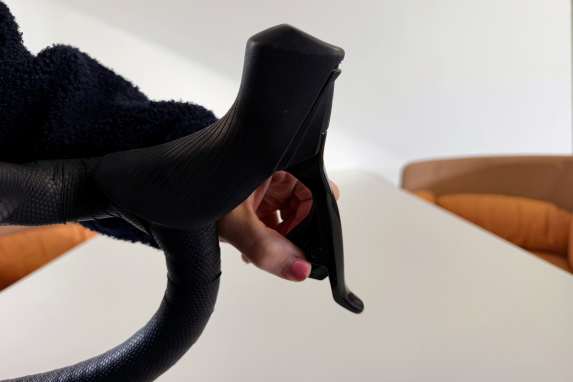
Wrenching tips for repairing road bikes at home
DIY repairs are also playing an increasingly important role for racing bikes. Many riders have started to build a small (or even a slightly larger) repair shop at home. Workshop (or at least the necessary Tools to be able to carry out at least standard work and inspections themselves.


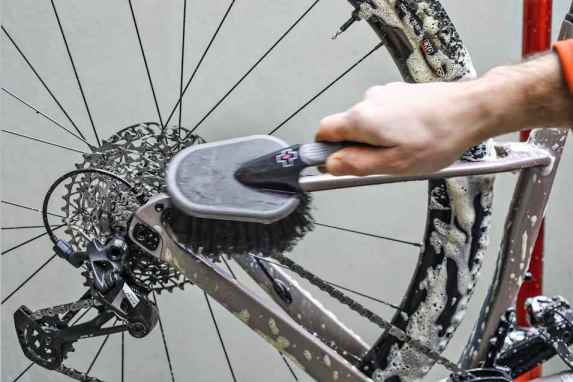

The advantages of repairing a bike yourself can be seen on various levels. In the following sections, TOUR shows which jobs can usually be carried out easily within your own four walls with a little practice.
Repairing a road bike yourself has advantages
As already mentioned, it is usually cheaper - especially in the long term - to buy your own equipment, set up a workshop in the cellar and take care of repairs and tightening work yourself.
But: Having your own road bike workshop offers yet another advantage. If you know how your Racing bike and how it can be repaired in an emergency is usually more flexible when travelling, for example if the hose is damaged.
Over time, "disruptive factors", such as minor damage, also often become apparent more quickly.
In short, it is definitely worth considering the advantages of having your own workshop at home. It doesn't have to be as big as is often assumed. Of course, if you want to, you can always buy additional equipment. However, one question remains: What work can be carried out in your own workshop? And when does it make sense to hire a professional?
Wrenching tips for road bike maintenance
First of all: Regular maintenance intervals are important if, among other things, the aim is to support a long service life of the bike as well as a high level of riding comfort. If you don't want to take your bike to a road bike workshop for maintenance, you can usually do the work yourself without any problems. However, in order to continue to guarantee a high standard of safety, it is essential to work completely and conscientiously.
The following steps are essential in the course of comprehensive maintenance.
Replacing the handlebar tape
This is probably one of the easiest maintenance steps of all: replacing the handlebar tape only takes a little practice, but then doesn't take much time. Immediately after fitting, it becomes clear how important this detail is in order to create a high level of riding comfort.
Additional tip: If you have never wrapped a handlebar tape before, you should definitely take enough time to do this and keep checking the current intermediate status. Otherwise you may have to start all over again.
Replacing the chain
Only when the Chain is in a smooth condition, it is also able to deliver the required performance. It is therefore important to check it regularly. It is not only when it breaks that it is time to think about replacing it. But what details actually indicate that it's time for a change? A simple trick can help here: If it is possible to lift the chain so far that at least three teeth are visible, it has had its day. How the new chain is then fitted depends on the manufacturer. All the important information can usually be found in the descriptions of the individual products.
Changing the brake pads
Safe and fast braking can also help to prevent accidents on a road bike. Comprehensive maintenance therefore includes checking and possibly replacing the brake pads. If they show signs of excessive wear, it is time to replace them. Once the new pads have been securely fixed in place, the tension of the brake cables often needs to be adjusted. After all, the new pads are higher than the old ones. And as always: Before the first ambitious downhill rides, please check the functionality of the brake pads. Brakes check!
Adjusting the circuit
The Circuit can change significantly over time. It's time to have a look here at the latest if there is a problem - but also during maintenance. Any wear is also noticeable in the shift cable area. It is usually sufficient to readjust the rear derailleur and front derailleur. The derailleur should then run much more smoothly again.
How often a road bike should undergo such maintenance naturally depends on several factors - above all the frequency of use.
You should bear this in mind when making adjustments in your own road bike workshop
The adjustment work is usually the first task that a road cyclist faces in their own workshop. This involves much more than just adjusting the height of the saddle.
The following points show which details need to be paid close attention to in order to enjoy a safe and comfortable ride.
- If you want to travel a little longer and at a more leisurely pace, you should also adjust your sitting position accordingly. It is advisable to choose a more upright seat. This can also prevent neck pain.
- Athletically ambitious riders should sit slightly (!) stretched.
- Those who fancy a particularly fast riding style should choose a position that leaves nothing to be desired in terms of aerodynamics. Here, the riding position is completely stretched out.
Please note: Not every bike is suitable for every riding style! It is therefore all the more important to consider your own riding requirements and habits when selecting a bike. Even the best set-up is not much use if the "basic structure" is not right. Road bikes are available in different model variants for different applications and scenarios, such as Gravel bikes for somewhat rougher routes than tarmac.
What do you need, apart from tools, for a road bike workshop?
If you want to maintain or repair your road bike at home, you need - apart from the right know-how and tools - a few more "details". Nobody who is planning to set up their own workshop for their bike should do without the following "extras".
A sufficiently large amount of space
Regardless of whether it's a small repair or extensive maintenance, the work involved needs space. After all, you not only need to be able to handle the road bike, but also the appropriate tools. A cellar or a slightly larger storage room is ideal for this. It is particularly important that the bike can be accessed from all sides. What's more, repairing a road bike can quickly become a dirty job. Every workshop should therefore be equipped with at least one window. This allows the odour caused by sprays, lubricants and the like to escape quickly.
A shelf or stand
This is a point that is often forgotten, but which is actually important. It is not always possible to repair the bike on the ground. In many cases, it needs to be at eye level. This is where a sufficiently large shelf comes into play. Alternatively, there are special stands that can be adjusted in many ways to jack up bikes for repairs. Bonus for the latter: these can usually be folded up and stowed away to save space.
A comprehensible organisation
Tidiness is crucial to create the basis for stress-free repairs. A lot of tools can accumulate at home over time. These should always be ready to hand and neatly stowed away. Those who rely on comprehensible organisation can make many processes easier.
Just as bicycle equipment changes over time and experience increases, so does the equipment in the workshop.
A changing workshop is therefore not a sign of chaos, but rather of a further development that makes the racing cyclist less dependent on official workshops.
You must pay particular attention to these wearing parts when carrying out repairs in your own workshop
Depending on how intensively a road bike is used, the wearing parts in particular can be severely affected. Regular maintenance can prevent many forced breaks.
In addition to this, it is important - especially for passionate drivers - to pay particular attention to the following details:
The hose
Depending on the condition of the inner tube, a small stone may cause damage that needs to be repaired immediately. If you have a repair kit with you or in the workshop, you have a clear advantage. This means that you may not have to postpone an upcoming tour.
The rims
At the latest when the rim flank is worn out, it is time to listen carefully. It is then important to remove the inner tube and tyres and also check the position of the rim tape. This must be in perfect condition and run in the centre.
As a general rule, regular checks can help to create the basis for the smoothest possible road bike operation.
For whom is home road bike repair worthwhile?
Basically, having your own road bike workshop or a selection of tools is particularly worthwhile for those who:
- are travelling a lot on their road bike and therefore often have to service and/or replace wearing parts.
- are keen to get to know their road bike better and broaden their own horizons.
- have sufficient space anyway, for example because they have a cellar or an attic at their disposal.
- want more flexibility in everyday life with regard to checking and repairing wheels, adjustments and other tasks and don't want to wait long for an appointment at the workshop.
What's more, reliable equipment doesn't have to be expensive. There are now many manufacturers who have specialised in a convincing price-performance ratio, making it possible for many beginners to enter the DIY sector with slightly cheaper equipment. However, it is precisely this fact that leads to an interesting question:
Can beginners also attempt to repair road bikes at home?
There are tasks that are absolutely no problem if they are carried out by someone with less experience. These include, for example, winding the handlebar tape or checking the chain. There are often instructions on the internet for the more complex tasks. (Accordingly, it also makes sense, for example, to ensure that the internet reception in the road bike workshop is sufficiently stable).
But: If you are even the slightest bit unsure whether you can carry out the upcoming tasks, such as changing the brake pads, you should always rely on the work (or at least the inspection) of a professional.
In some large cities in particular, there are also opportunities to meet up for road bike repairs in larger workshops. The audience is a colourful mix and often racing bike beginners and passionate riders or mechanics come together here. Depending on the workshop, a large proportion of the tools required are also provided. A great alternative for anyone who is just starting to find out to what extent DIY repairs are for them.