


The UCI had introduced the new technical regulations with the declared aim of increasing safety in the peloton. Specifically, a maximum of a 54-tooth chainring in combination with an 11-tooth cog should be allowed to be used - or a combination with this deploying. The UCI's argument was that this could reduce the maximum speed in the peloton. The US manufacturer SRAM lodged a complaint with the Belgian competition authority BCA last year. The company argued that the new regulations distorted the already tight market for drive systems to the disadvantage of individual suppliers. The court ruled in favour of SRAM - whereupon the UCI appealed.
Court criticises UCI's lack of transparency
The Belgian Market Court agreed with the BCA's assessment and found that the authority "rightly concluded that there was a restriction of competition due to the UCI's failures in terms of transparency, objectivity and non-discrimination in the development of the standard." In its judgement, the Market Court confirmed the validity of the interim measures ordered by the BCA and in particular found that:
- the BCA was competent in this case due to the possible impact of the technical standard on Belgian territory
- the BCA had rightly concluded that there was a prima facie restriction of competition because the UCI had not applied transparent, objective and non-discriminatory criteria when developing the standard;
- the UCI failed to justify why the maximum gear ratio standard was necessary and proportionate to achieve the objective of improving rider safety; and
- the BCA correctly assessed the existence of a risk of serious, immediate and irreparable damage to SRAM and the cycling teams equipped with its drivetrain systems.
In general, the court emphasises that standards adopted by sports federations must comply with competition law requirements if they have an economic impact and, in such a case, must be based on transparent, objective and non-discriminatory criteria.
UCI expresses surprise
The World Cycling Union already reacted with incomprehension after the original BCA decision and to SRAM's opposition. "The Maximum Gear Ratio Test Protocol was established based on a recommendation from SafeR - the organisation that brings together representatives of riders, teams, event organisers and the UCI to improve safety in men's and women's professional cycling - with the aim of collecting data to determine whether the gear ratio limit is an area that needs to be regulated. In fact, it has been proven that the increase in top speeds that riders have reached in recent years, especially on descents, is linked to equipment developments and is a risk factor for their safety," the UCI 2025 explained in a statement. We have not yet received any reactions to the judgement.
Background
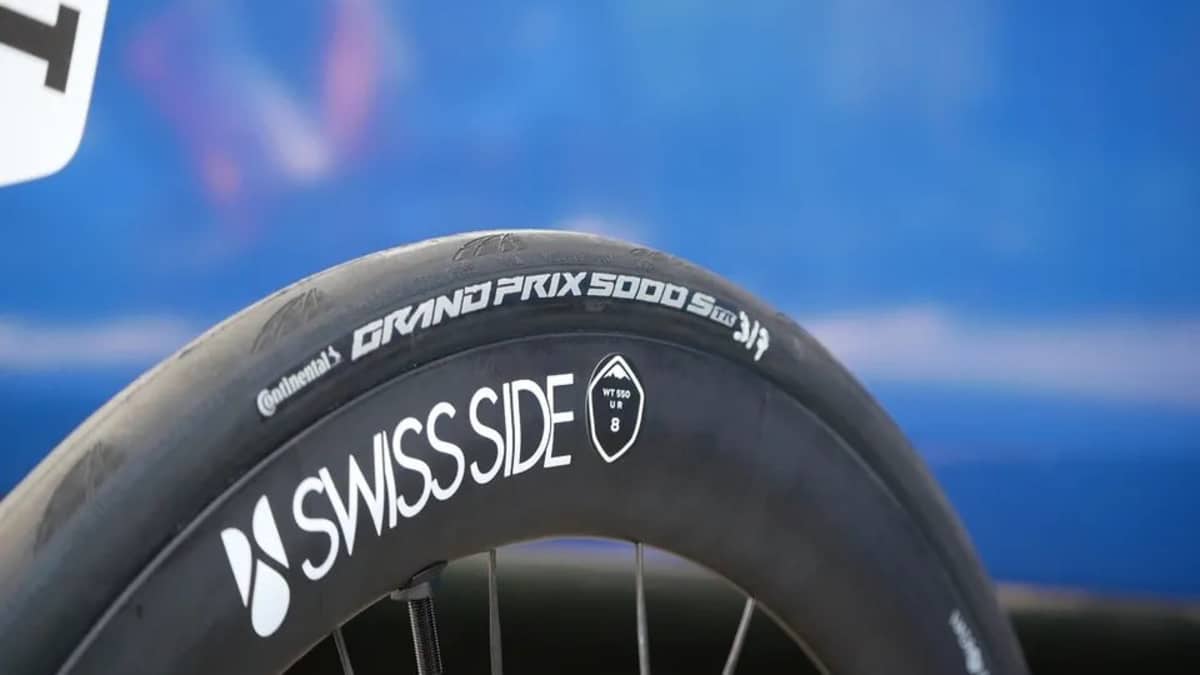
In 2025, the management committee of the International Cycling Union made several decisions regarding the equipment used in cycling. The common thread of the decisions is the limitation of aerodynamic advantages in order to limit speed and thereby, in the opinion of the UCI, increase safety. One of the most important changes concerns the handlebar width for road races and cyclocross events. It was also announced that the rim height would be limited. There was also a lot of resistance here. The aero expert Swiss Side had spoken out against the planned changes in an open letter.


Kristian Bauer
Editor
