


The Paris-Roubaix cycling classic is extremely popular with cycling fans and tempts some fans to steal a cobblestone from the original route as a souvenir. Course director Thierry Gouvenou told the Dutch daily newspaper De Telegraaf that this problem has become increasingly serious: "We have to deal with it more and more and have a lot of overtime. In the Wallers forest and also in the 'Carrefour de l'Arbre' sector. These are mythical strips, and people steal cobblestones there to take home as souvenirs. They don't realise that they are making big, deep holes in the road. It's incomprehensible that they don't think about the consequences this could have for the race. This will certainly lead to accidents in the men's and women's races on Sunday. What these people are doing can be life-threatening," Gouvenou told De Telegraaf.
According to the newspaper report, the thieves come at night with pickaxes. Volunteers regularly check the various sectors in advance. If the theft happens early, any holes that are discovered can still be filled in.
The maintenance of the cobblestones for Paris-Roubaix
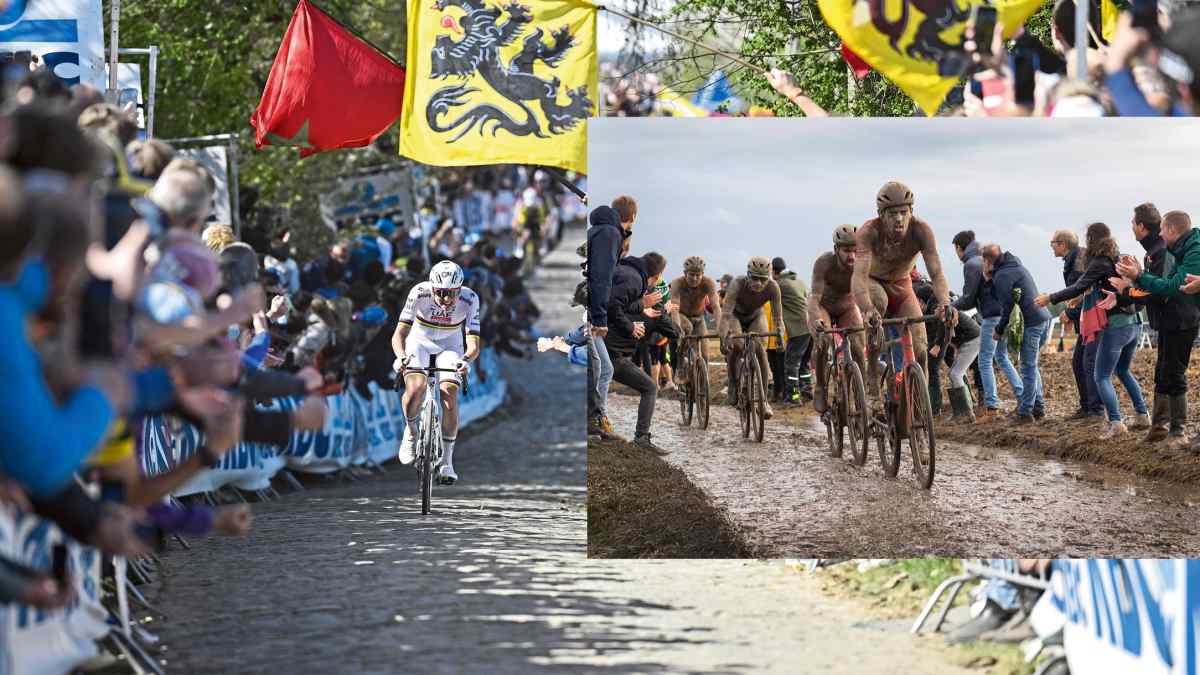
Maintaining the various sectors of the Paris-Roubaix route is a lot of work. It is mainly carried out on a voluntary basis by the cycling fans "Les Amis de Paris-Roubaix". The association was founded in 1977. Its main task is to preserve and restore the characteristic cobblestone sections (pavés) of the Paris-Roubaix cycle race and to open up new sections. Without this work, many of the historic sections would no longer exist today, as they would be threatened by asphalting or natural decay. The association works closely with volunteers, regional authorities and the race organiser Amaury Sport Organisation (ASO) and even maintains its own museum in Roubaix. The members and volunteers of the association replace damaged or missing stones that are lost due to weather, agriculture or souvenir hunters. A stone weighs up to five kilograms and is placed by hand. The helpers fill gaps, level out uneven areas and secure the stones in the ground so that the routes remain safe yet challenging for the riders.
At this point, you will find external content that complements the article. You can display and hide it with a click.
Pavés instead of tarmac
The association works together with vocational schools for horticulture and landscaping. This gives the students practical training while the pavés are professionally maintained. The material costs for maintenance (approx. 10,000-15,000 euros per year) are covered by donations, public subsidies and the support of the race organisers.
In the 1970s, the asphalting of many of the region's country roads began. Les Amis de Paris-Roubaix successfully campaigned to ensure that the historic pavé sections were preserved and not tarmaced.

Kristian Bauer
Editor
