


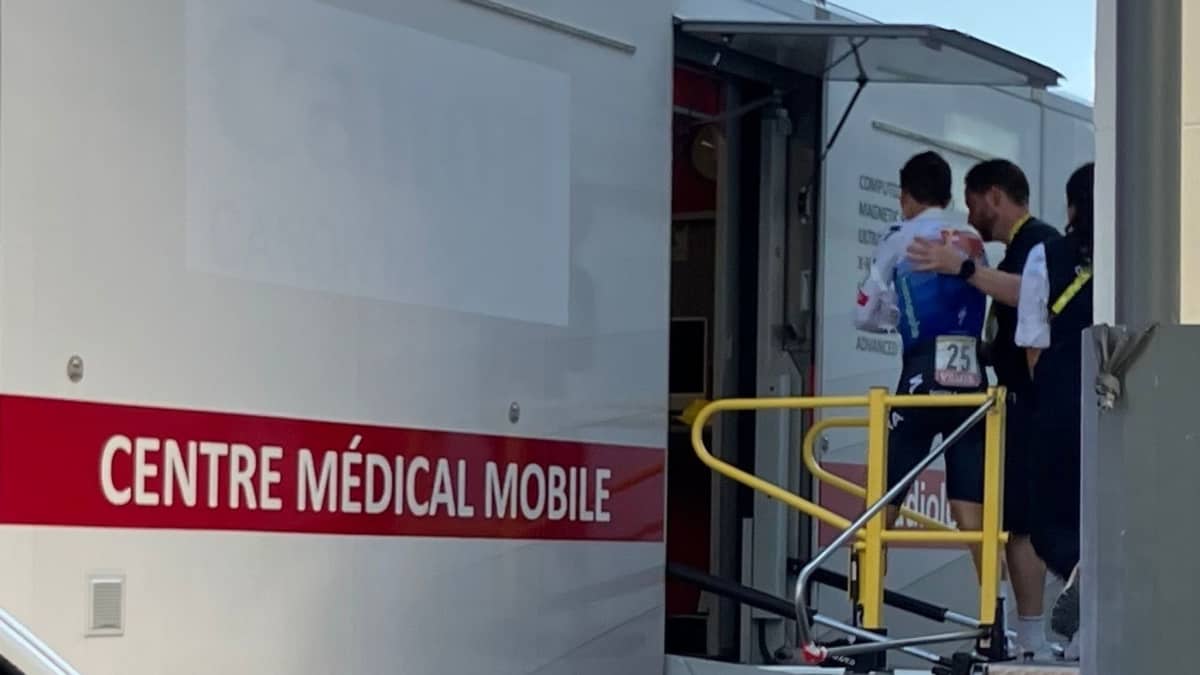
It was a real shock for all cycling fans. In the Tour de France time trial from Évian-les-Bains to Thonon-les-Bains, the German Florian Lipowitz was doing very well. In a right-hand bend, he crashed and skidded across the tarmac, slamming into the kerb and a barrier. It was immediately clear that the Tour de France was over for the podium contender. The team later announced that Florian Lipowitz had suffered a broken collarbone in the crash. He has already undergone surgery and is still in hospital.
Why was Lipowitz ousted?
The TV footage shows several things: you can see that Florian Lipowitz is approaching the bend at a very steep angle because he is swerving to avoid a manhole cover, leaving him with very little space between himself and the barriers on the right. He is travelling at high speed and the bike is being shaken slightly by bumps in the road – meaning that contact with the road surface is not ideal. He rides over a zebra crossing – which means there is a layer of paint on the tarmac. Florian Lipowitz is steering extremely sharply into the bend and, on the TV footage, you can see his handlebars turning to the right and the front wheel slipping away. So he didn’t tip over to the side; rather, the front wheel lost contact with the road. He then skids across the tarmac and slams his shoulder into the kerb. It was clear to all spectators: this meant the end of the Tour de France. Team manager Ralph Denk explained that evening: “Ultimately, he was going too fast.” He criticised the fact that it had been virtually impossible to ride the complicated route in advance at a leisurely pace: “In a time trial like this, you take full risks and only have a small window of opportunity to assess the route. The route wasn’t closed off yesterday, when we would actually have had time; this afternoon there was only a brief window, and then you just have to commit 26 kilometres to memory.”

What exactly caused the fall?
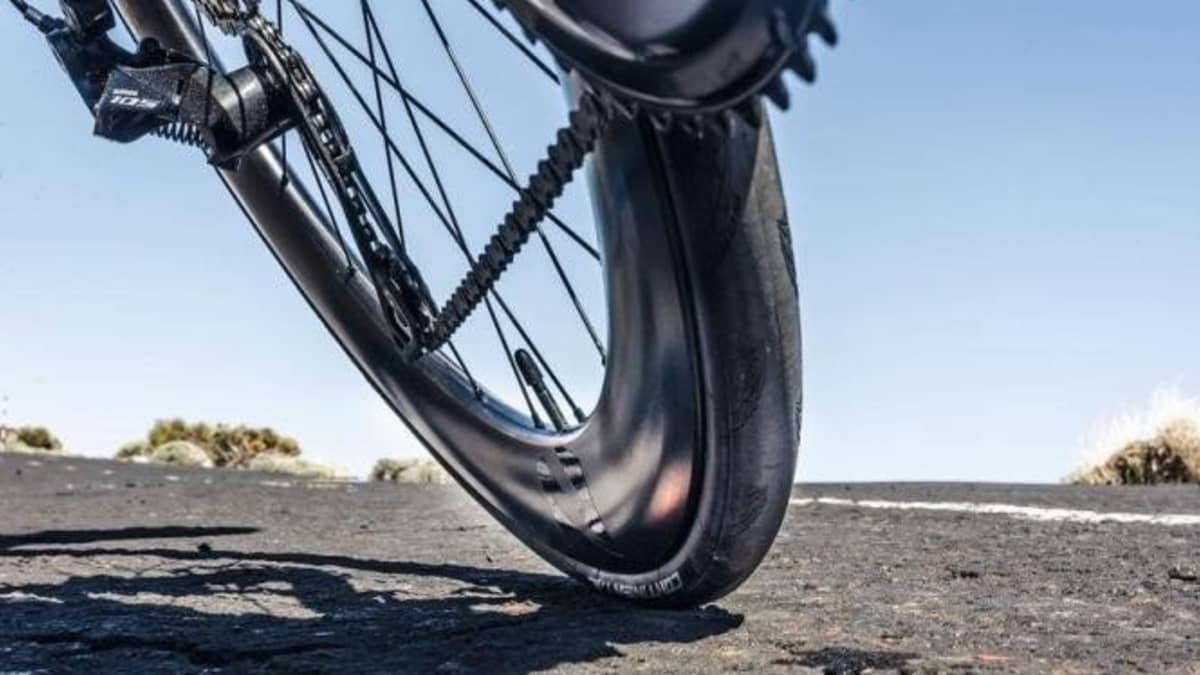
The fact is that Florian Lipowitz entered the bend at very high speed and at a very steep angle. Due to uneven road surfaces, the time trial bike was not stable on the road. On modern time trial bikes, the rider’s arms are positioned very close together and high above the handlebars. Navigating a bend like that whilst dealing with vibrations is therefore very challenging. It is well known that road markings always pose a hazard because they reduce grip. Lipowitz was riding straight across a zebra crossing. Proper accident investigators would also ask about the tyre pressure at the time. In time trials, the ideal tyre pressure is particularly important. Lower pressure means a larger contact patch, allowing the rubber to interlock with the tarmac – resulting in better grip. At the same time, the softer tyre absorbs bumps better and conforms more closely to the road surface, which also improves grip. It also reduces the risk of the tyre bouncing on bumps and then losing traction. Just how dangerous the bend was became apparent later with Tadej Pogačar: he too skidded briefly on the bend, even though he’d already been warned. Experts criticised the fact that the safety measures along the route at the bend were not ideal. If a bale of straw or some other protective barrier had been placed on the road, Lipowitz would probably have got away with just minor grazes when he crashed.
What does this mean for Florian Lipowitz and the team?
For Florian Lipowitz, the crash is particularly bitter. He was well placed in the general classification and the tough stages in the Alps would have suited him down to the ground. Team manager Denk and all observers had given him a good chance of making up valuable time in the third week of the Tour. “I’ve always said, ‘Just wait and see what happens in the final week,’ and now he’s no longer here – that’s a shame. But I must also say, we’re pleased with our dual strategy,” explained Denk. The team can now focus all their efforts on Remco Evenepoel, who won yesterday’s time trial. As for Lipowitz, it remains to be seen when he’ll be able to get back on his bike. Not every collarbone fracture heals at the same rate. In professional cycling, there have been examples of riders getting back on their bikes after just four weeks. However, Florian Lipowitz’s crash looked particularly brutal. With a complicated fracture, the break is likely to be longer. The World Cycling Championships in Montreal (20 to 27 September) could still be a possible target for the season, though.
Florian Lipowitz alongside Vingegaard
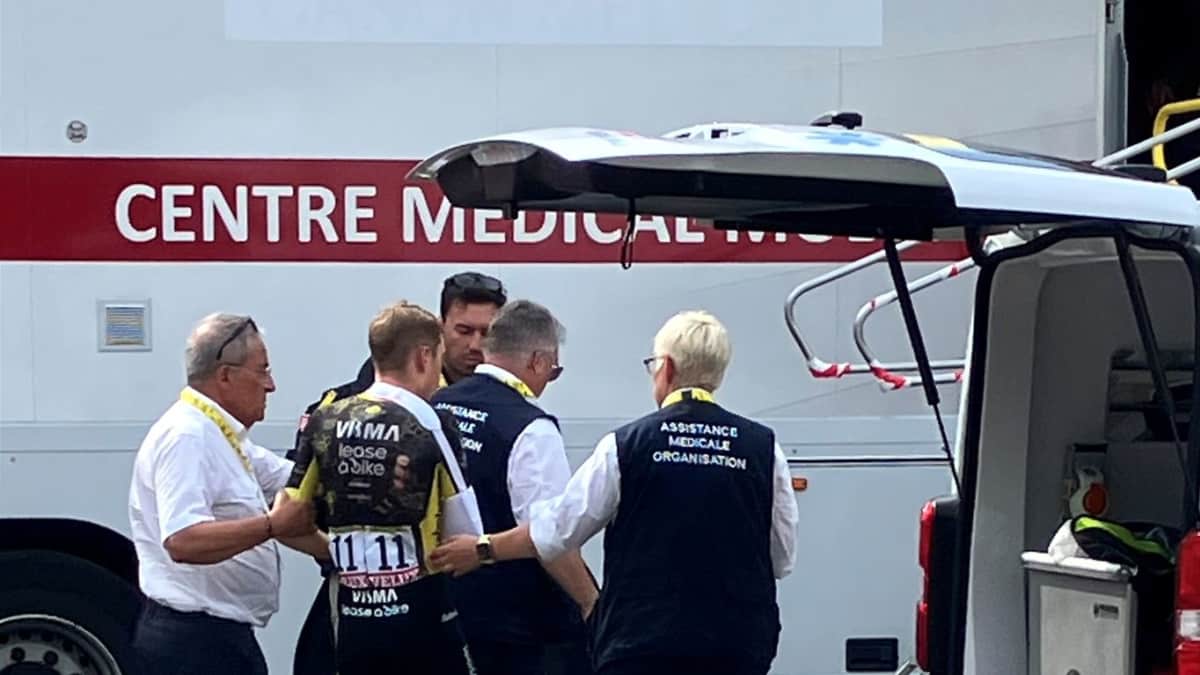
TV viewers couldn’t help but think of Jonas Vingegaard’s crash on Stage 15. Vingegaard also broke his collarbone and was forced to withdraw from the Tour. But the parallels go even further: in both cases, a doping test took place the night before the fateful crash. All eight riders from the Red Bull team were tested at around 10.00 pm on the evening before the individual time trial. However, this was not one of the controversial night-time tests recently carried out on four-time Tour winner Pogacar and Vingegaard, who had withdrawn following a crash. Pogacar had been woken at five o’clock, and Vingegaard at two o’clock in the morning before his crash. Nevertheless, there is a bizarre parallel between the crashes of Florian Lipowitz and Jonas Vingegaard.
Scientific background
It is unclear whether it was actually down to the road markings – but it has been scientifically proven just how dangerous the paint is for narrow road bike tyres. Standard road markings (such as thermoplastic, cold-applied plastic or emulsion paints) are applied in liquid form or whilst hot. They fill the pores of the asphalt and harden into a smooth plastic or resin layer. As a result, both the macro- and micro-texture are lost. The tyre can no longer ‘grip’ the road surface.
When cornering, centrifugal force acts as a lateral force. As long as the tyre is rolling on tarmac, there is a high level of grip. If the front wheel hits the white line whilst leaning, the coefficient of friction drops abruptly (often by 30–60 per cent); for a few milliseconds, the tyre loses traction, begins to slip and slides sideways. Even if the tyre returns to normal tarmac immediately afterwards, the momentum from the sudden skid is usually enough to throw the rider off balance.

Kristian Bauer
Editor