


In this article, we use so-called affiliate links. With every purchase through these links, we receive a commission from the merchant. All relevant referral links are marked with . Learn more.
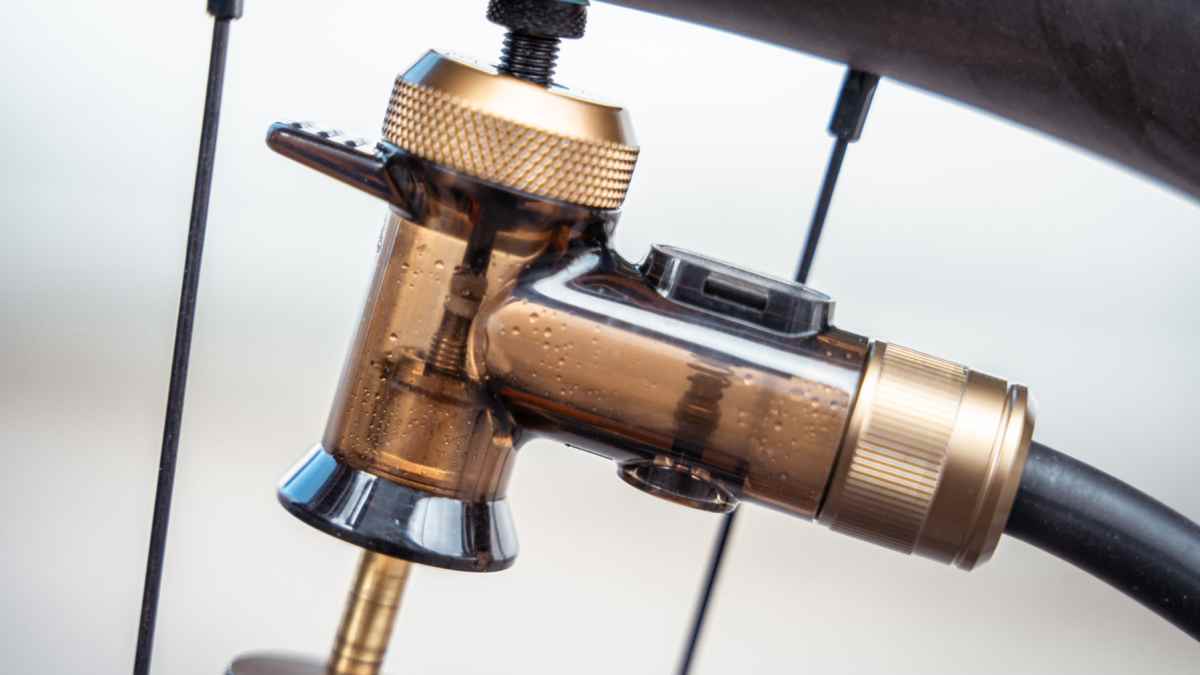
The Clik Valve System breaks with the tradition of filigree grub screws. At its core, it is a valve system that is based on a positive click connection based. Instead of laboriously screwing on a pump head or fixing it with a clamping lever, the matching head snaps onto the valve head with a defined resistance - the eponymous "Clik".
Technically speaking, the principle is similar to a quick-release coupling. A groove on the valve head serves as a latching point for the spring force inside the pump head. This ensures an immediate, tight connection that remains stable even at high pressures.
Conversion: Which valves are compatible?
Schwalbe has designed the system in such a way that a complete tube change is not necessary if the existing valve has a exchangeable core owns.
- Sclaverand (SV) & Dunlop valves (DV): Simply unscrew the old valve insert with the enclosed tool and replace it with the Clik-Valve insert.
- Autovalves (AV/Schrader): As AV cores are permanently installed or are dimensioned differently, Schwalbe offers a Adapter which is simply screwed onto the existing thread.
- Tubeless systems: Special tubeless valves with SCV standard are also available or can be upgraded by replacing the core.
Important note: Caution is advised with ultra-light TPU tubes (e.g. Aerothan). Conversion is only approved for models with an aluminium shaft. Hoses with a plastic valve stem are not compatible due to the thermal and mechanical stress when screwing in.

The available conversion kits
Schwalbe offers modular sets to make it easier to get started:
- Conversion Kit (Basic): Contains two valve inserts (SV/DV) or an AV adapter and new dust caps. Price: 5,95 Euro / 9,95 Euro
- Starter Kit: In addition to the valves, includes the Pump head adapter for existing pumps. Price: 13,95 Euro
- Full Kit / Pump Head: For workshops or enthusiasts, complete pump heads are available for replacement on the floor pump (in co-operation with SKS). Price: 16,95 Euro
The pump question: old versus new
A decisive plus point is the Backwards compatibility. The Clik Valve is dimensioned so that it can still be inflated with conventional SV pump heads in an emergency. So you are not stranded if you don't have your own pump with you. However, our tests to date have shown that the manual forces increase significantly with conventional pump heads and that the pressure gauges do not display the correct pressure.
So you need it for full comfort:
- The SCV pump head adapter: This is simply inserted into an existing AV pump head (auto-valve insert) of the floor pump and locked in place.
- Native SCV pumps: Manufacturers such as SKS are already integrating the system into new models ex works.
Radically simplified: This is how inflation works
- Remove the dust cap.
- Press the pump head on vertically until it audibly clicks into place.
- Pumps. The pressure gauge immediately indicates the correct internal pressure, as the valve is held open mechanically by the head.
- Once the target pressure has been reached, simply remove the head with two fingers. There is no loss of air due to the system.
Inconvenient: release air or check pressure
Things are a little less practical if you want to let air out of the tyre or check the pressure with an air pressure checker. Models that are actually designed for SV valves do not usually display the pressure correctly on a Clik Valve valve - in this case, you have to rely on the adapter or a special measuring device.
Deflating was also more intuitive with the classic Sclaverand valves - unscrew the valve and press the pin - it could hardly be easier. With Clik Valve, the technology is deeper in the core and you at least have to use your fingernail to press the pin. It works even better with a stick or a small stone.
Advantages and disadvantages of the Clik Valve System
| Advantages | Disadvantages |
| Minimally higher air flow rate compared to SV valves | Pressure gauge deviations: Incorrect pressure values were displayed for some pumps in the test. |
| Wear-free: No rubbers in the pump head that are shredded by threads. | Sensitivity: The targeted release of air is somewhat trickier than with the Sclaverand valve. |
| Intuitive operation: one-handed operation possible, no more bending of valve pins. | Weight: Minimal weight increase per valve (approx. 1-3 g depending on version). |
| Reliable sealing: No hissing or accidental emptying in the event of lateral forces. | System connection: For full convenience, all wheels and pumps in the household must be converted. |
Schwalbe Clik Valve tubeless valves in test
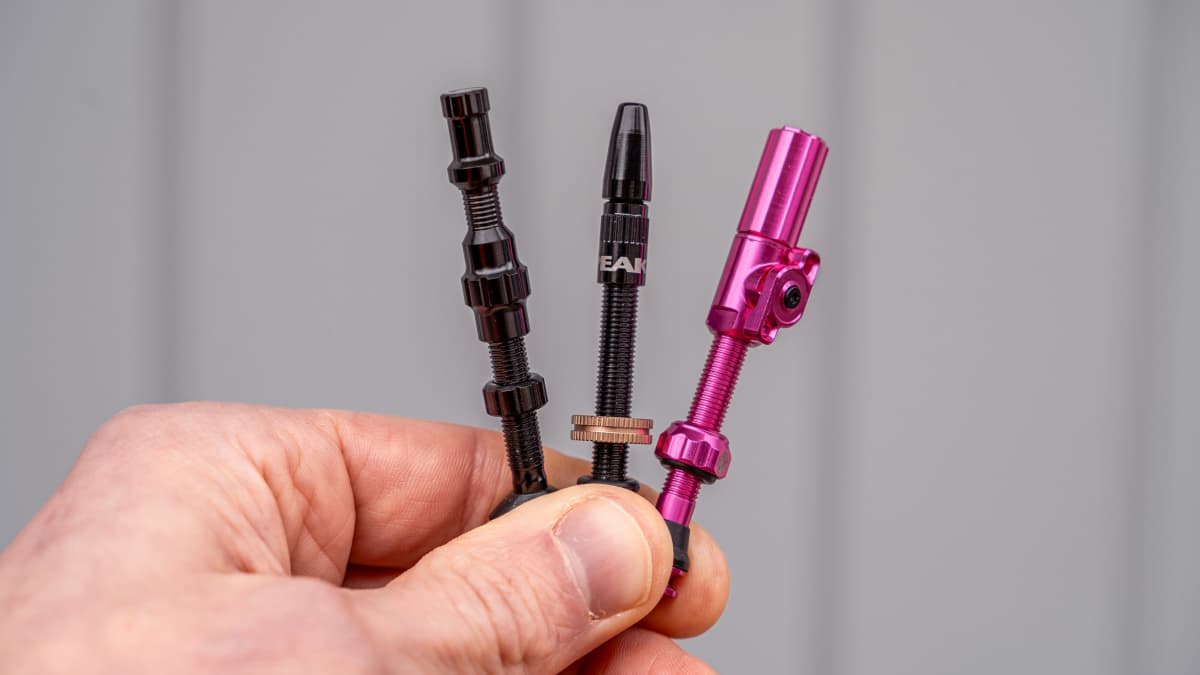
Schwalbe also has suitable valves with Clik Valve in its programme for tubeless riders. In the course of our tubeless valve test, we were able to put the valves through their paces.
- Price: from 23,90 Euro >> available here
- Weight: 12,74 gram
- Valve length61 millimetres
- Available lengths: 40 / 60 / 80 millimetres
- Valve head: Schwalbe Clik Valve
- Outlet openings / insert-compatible: 3 / yes
- Special features: Innovative valve head with click system, requires special pump head, 4 mm hexagon socket
Rating & Conclusion - Schwalbe Clik Valve Tubeless Valves
| Category | Grade |
| Weight (20%) | 0,5 |
| Handling (20%) | 3,1 |
| Airflow (30%) | 3,4 |
| Protection against clogging (30%) | 3,0 |
| BIKE NOTE | 2,6 |
Conclusion: Schwalbe Clik Valve System
The Schwalbe Clik Valve is more than just a gimmick. It addresses the biggest weaknesses of the classic Sclaverand valve: its susceptibility to mechanical damage and the often cumbersome connection to the pump head.
Existing valves can be converted with little effort and at low cost. The new Clik Valve tubeless valve is also easy to fit thanks to its hexagon socket insert. In conjunction with the special pump head, Clik Valve facilitates handling when inflating - it can be fitted and removed without the need for a clamping lever.
However, adjusting the air pressure is fiddly because the valve pin sits deep in the core. The modified design hardly improves the air flow compared to the classic Presta or French valve, as the Sclaverand bicycle valve is also known. The valve therefore offers no advantages for tubeless setups and also offers only limited protection against clogging with sealing fluid.
This is how we measured the air flow
In order to find out which valve offers the best airflow, we carried out extensive series of measurements. However, the effect can be most clearly demonstrated directly on the wheel. The basis is a 29 x 2.4 inch wide MTB tyre, which is inflated to 2.0 bar using a digital pressure gauge. In several runs, we measured how much air escapes in five seconds when each valve is fully open.

While all Presta valves - with deviations of +/- 2 per cent - are in the range of 34.1 per cent, twice the amount of air flows through the Topeak valve in the same time. At Stan's we measured an air loss of 78 per cent, at Reserve 87.4 per cent. The coreless Muc-Off achieves 100 percent air flow, which means that after five seconds there was no measurable pressure left in the tyre. This makes it by far the best tyre in this comparison. In terms of airflow, the Schwalbe Clik Valve shows hardly any advantages over classic Presta valves.


Stefan Frey
Editor