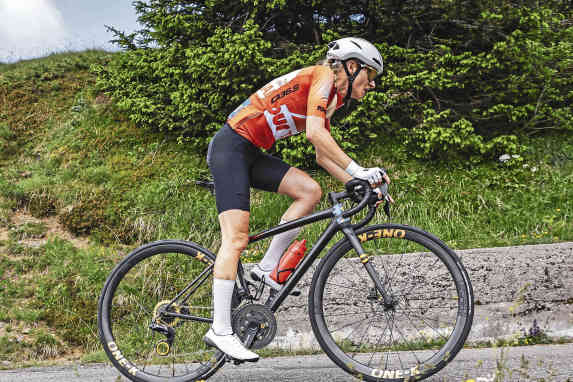
Tours in Austria: by road bike over mountains and co.
If you're a passionate road cyclist and fancy a varied landscape, special challenges and an almost unique backdrop, you should treat yourself to road bike tours (or a complete road bike holiday) in Austria to deal with.


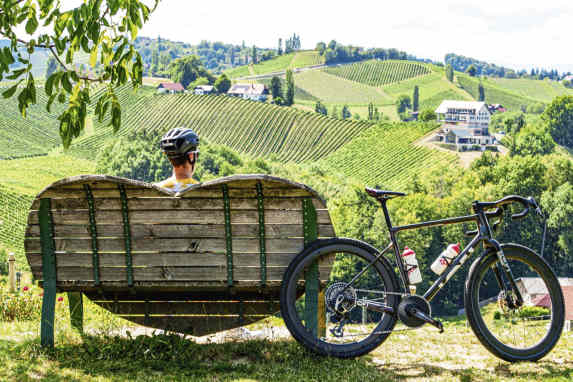

TOUR has put together a selection of popular routes through the beautiful Austrian countryside. Sometimes it is also worth turning off in search of an even steeper mountain stage. Many of the tarmac paths then lead back to more relaxed roads in the valley.
Different routes: That's why road cycling in Austria never gets boring
Many people think of the mountains when they think of Austria. And indeed: here in particular, it is possible to challenge yourself again and again with regard to mountain stages and the corresponding altitude profiles. But Austria can do more. In addition to numerous climbs and mountain passes, which often leave even professionals breathless, there are also an almost infinite number of flat routes.
The regions of Upper Austria and Salzburgerland in particular, but also Carinthia and Tyrol, are popular with racing cyclists of varying levels of difficulty. If you are travelling to a road bike region for the first time (or want to Fitness level If you want to put yourself to the test, you should definitely take some time to compare the individual routes in advance. In this way, the local conditions can be utilised a little better - whether as part of mountain training or on fast passages.
What road bike challenges does Salzburgerland offer?
Whether you are cycling in the Salzkammergut region or around the Grossglockner: Salzburgerland is one of the destinations that always inspires its regular visitors and is perfect for a road bike holiday. Here, beginners and pros almost go head to head. There is a lot going on in Salzburgerland, especially in the warm summer months.
There are many reasons in favour of these regions. Among other things, many racing cyclists appreciate the mix of picturesque mountain roads and passes. From time to time, the routes also lead past idyllic lakes. No wonder that Salzburgerland also attracts many racing cyclists who fancy an extensive holiday lasting several days.
Another special feature: the special conditions that exist in Salzburgerland with regard to the Cycling racing are - contrary to what you might think - not only appreciated by holidaymakers, but also by locals. Many people who live here are always drawn to the streets and the countryside.
Where can beginners go road cycling in Salzburgerland?
Many tourists who get on a racing bike for the first time in Salzburgerland opt for the so-called Mondsee tour.
The route is comparatively flat and sometimes allows high speeds. However, most of the bends are easy to see so that you can ride with foresight as far as possible. However, it would also be wrong to see the Mondsee circuit as just an area for amateurs. There are also many professionals who come here to work on their form, for example.
Over the course of time, the Mondsee-Runde route has been improved. If you want to complete the entire route, you should plan on 25 kilometres. However, with only around 660 metres in altitude, the Mondsee loop is not suitable for classic mountain training.
Can you also train mountain stages in Salzburgerland?
In other regions, Salzburgerland is anything but flat. For example, if you want to get up high - in the truest sense of the word - and enjoy mountain passes, you should add the Postalmrunde to your bucket list. Those who fancy mountain stages and challenging climbs on beautiful pass roads are in the right place here.
The entire loop is more than 100 kilometres long. And the metres in altitude are also impressive. After all, around 2100 of them have to be conquered here. Alternatively, there is also the Gaisberg tour. This is about half as long and still offers around 1300 metres in altitude. Once at the top of the Gaisberg, riders are treated to a wonderful view.
What characterises the road bike routes in Tyrol?
Tyrol offers virtually ideal conditions for anyone who is enthusiastic about road cycling at different levels of difficulty. Here it is difficult to simply let the landscape whizz past you. The connoisseurs among the racing cyclists should definitely plan a stop or two to recharge their batteries.
Perhaps also to give your muscles a little break? The level of difficulty of the individual routes in this region of Austria should not be underestimated. At the same time, many of the well-known routes are great for preparing for competitions or similar.
The mountain stages in particular, which can be explored on road bike tours, are sometimes much steeper than in other regions of the country. Many professional cyclists travelling here set their sights comparatively high - in the truest sense of the word. This is because many routes actually end on passes or mountain peaks. At the end, those who have made it are rewarded with a breathtaking view.
Another piece of good news: if you are travelling in Tyrol, perhaps even booking a road bike holiday, you don't have to climb any mountains to be active. The region is one of the areas with a large number of flat roads with little or almost no incline. Depending on your personal preference, it is possible to reach comparatively high speeds here, for example when travelling through a valley.
Which road bike tours in Tyrol are particularly popular?
One of the most popular road bike tours in Austria - especially between June and the end of October - is the Ötztal Glacier Road. You need a bit more stamina to tackle it. Beginners should therefore always opt for an alternative. This route can be described as "dreamlike" with a clear conscience. It starts and ends in beautiful Sölden and, with a total length of around 30 kilometres, is not too long. Road cyclists who already have some experience should be able to complete the route in around three hours.
The scenery here in the Ötztal Alps region is simply breathtaking. But be careful! Despite the largely manageable route, don't underestimate the gradient that has to be mastered here. The easiest part is the way back down into the valley. In many areas, the motto here is "Let it roll!". At the same time, it is important to bear in mind that the roads here are often very busy. This is because cars are also allowed here. Conclusion: The Ötztal Glacier Road does not pose a major challenge, especially with regard to the technical requirements that racing cyclists should bring with them. Nevertheless, it demands a certain level of fitness from the riders.
If you want to climb as many metres in altitude as possible in Tyrol, you should take a look at the Zillertaler Höhenstraße. Starting and ending in Hippach, you have to conquer around 1600 metres in altitude here. The entire route is around 35 kilometres long. It is particularly busy here between May and October.
One practical feature is that there are a total of five access routes to the Zillertaler Höhenstraße. Due to the local conditions and the sometimes considerable gradients, this region is also particularly suitable for experienced cyclists. If you prefer to cycle on your own, you should head for Ried. There is an ascent to the Zillertaler Höhenstraße here, which is relatively rarely used.
Are there also road bike routes for beginners in Tyrol?
If you want to ride your road bike in Tyrol, you don't necessarily have to be an experienced road cyclist. Those who would like to test their own climbing skills a little more thoroughly should find out more about the conditions in the Chiemgau-Runde region. This runs via Wildbichl and is one of the routes that appeals to a particularly broad target group. The total length of the route is around 130 kilometres. You should allow around six hours to complete it. These figures alone show that there must be numerous and longer flat sections. However, there are also one or two mountain sections in the region that are well worth riding.
The path that leads from Seegatterl to the Winklmoosalm, for example, has a gradient of around 18 per cent. Here you have to conquer almost 450 metres in altitude. At the top, riders are rewarded with a wonderful view of the surrounding mountain pastures.
Road bike tours in Carinthia
Carinthia has also developed into a popular region for racing cyclists over the years. Due to its proximity to Slovenia and Italy, the audience here is particularly international. Especially those who want to start the racing bike season a little earlier are in good hands here.
Due to the geographical location, the temperatures here are usually so mild at the beginning of March that extended walks are possible. Tours nothing stands in the way. This usually also means that the season lasts one to two months longer towards winter than is the case in other regions. Both beginners and advanced riders now appreciate the conditions in Carinthia. The list of tempting routes is long.
Which routes are particularly popular in Carinthia?
The Carinthia region offers racing cyclists many highlights that are particularly popular. One of the reasons for this is that many of them can look back on a long history. A particularly characteristic example of this is the Grossglockner High Alpine Road. It was opened back in the mid-1930s and is considered one of the most beautiful of its kind in the whole of Europe. Anyone who manages to reach the Kaiser Franz Josefs Höhe, for example, will be rewarded with a breathtaking view of Austria's highest mountain, the Großglockner.
However, the popularity of the route ensures that there is a lot going on on the 50 kilometres or so that have to be passed here. Those who want to tackle the complete loop have to cover 170 kilometres. The route is open between May and (early) November. However, it is closed at night.
If you fancy the more "leisurely" mountains, a road bike excursion on the Nockalm Road is a good idea. Here, your soul can relax at the sight of numerous green mountain pastures. The route is "only" 35 kilometres long and has a few bends. However, the ascent is largely manageable and therefore also ideal for beginners. Speaking of "beginners": they should also feel particularly at home on the Villach Alpine Road. Over a distance of just over 15 kilometres, around 1200 metres in altitude have to be conquered here. Ideal for anyone who wants to get used to mountainous rides or prepare for a road bike marathon!
Can you also travel from Carinthia to Italy?
Fancy a little international flair? In this case, it is also a good idea to take a closer look at the road bike region of Carinthia. One route that plays an important role with regard to cross-border cycling is the Carnic Dolomites Road. The route leads through the Alps and is therefore very challenging in some areas.
But: the wonderful flair is worth the effort. The route is 300 kilometres long in total. Despite the fact that it is also very popular with tourists, there are numerous quiet sections. Ideal for all road cyclists who want a mix of different impressions! And of course, the entire route does not have to be completed in one day. There are many hotels in Carinthia and the surrounding area that have adapted to the needs of racing cyclists and can be used as a starting point. However, it makes sense to book as early as possible, especially in the high season.
What does the region of Upper Austria have to offer racing cyclists?
Those who are interested in Upper Austria and Racing bike-When people think of cycling, they often (rightly) think of the Salzkammergut. There are not only numerous lakes waiting to be circumnavigated here. The large number of bends, pass roads and (sometimes rapid) descents also attracts lots of tourists and locals.
In general, it is probably the mix of flat routes, beautiful views and steep climbs that makes the region so popular. What's more, the Salzkammergut is one of the regions that has developed more and more paths and routes for racing cyclists over the years.
Is it possible to ride a road bike in the Upper Austrian Limestone Alps?
Many racing cyclists would certainly describe the routes in the Kalkalpen region as the most beautiful of their kind in the whole of Austria. One of the reasons for this is certainly because there are comparatively few cars on the road here.
One of the easiest routes is certainly to start in Wels and then continue in the direction of Thalheim. Overall, the route is characterised by two longer climbs. These are in the region around Nußbach. Steyr is in the middle of the tour. From here you can then tackle the return journey to Wels.
Attention! Although there are "only" two steeper climbs here, it is mainly experienced bikers who should feel particularly at home here. Six to seven hours should definitely be planned for the more than 100 kilometres. However, your efforts will be rewarded in many places with the wonderful panorama of the Limestone Alps.
Where can you ride a road bike on the lake in Upper Austria?
Many people find cycling along lakes particularly pleasant and relaxing. How practical that there are also corresponding routes in Upper Austria! How about a trip to Lake Attersee?
One particularly popular route starts in Bad Goisern on Lake Hallstatt. From here, it is possible to take the road to Bad Ischl and then set off in the direction of Ebensee. From here, it is not far to Lake Attersee. One particular advantage is that most parts of the route are well tarmaced and therefore easy to cycle on.
Why is Styria so popular with racing cyclists?
Styria should not be underestimated in terms of its challenges for road cyclists. Experienced road cyclists looking for the right routes here should focus on the north of the region. The Gesäuse National Park, for example, offers great routes that can make your muscles burn.
Beginners and those who perhaps don't want to push themselves too hard should perhaps opt for a route in the south of the region. There are definitely climbs here, but also many flatter sections that lead past picturesque scenery, for example. Those who fancy travelling by road bike to another country, in this case Slovenia, should opt for a route in Eastern Styria.
Which road bike region in Styria offers a particularly impressive backdrop?
If you fancy comparatively empty roads and beautiful natural scenery, the Schladming-Dachstein region should be on your shortlist. The roads have comparatively little traffic and are surrounded by beautiful scenery.
The famous Stoderzinken panoramic road is a particularly popular destination in this context. It is by no means just racing bike experts who like to stop by here. Many beginners also use the region to, for example Interval training to carry out. However, a large part of the route is comparatively flat. If you want to do some kilometres, this is the right place for you!
Is it possible to combine road cycling and sightseeing in Styria?
Road cycling is often, but not always, about time. The Vulkanland proves how easy it can be to combine sport and sightseeing. Many start from St. Ruprecht an der Raab and then cross large parts of the Vulkanland. The number of climbs and mountains is largely manageable here. Instead, there are always moderate ups and downs. It certainly won't be boring!
There are many sights to admire along the route. Riegersburg Castle is a popular stop-off point. If you want to complete the entire route, which is around 130 kilometres long, you should plan around seven hours and around 1,500 metres in altitude. From a technical point of view, this is less of a challenge. However, the fitness factor should not be underestimated.